
Ukrainian Steel Made from Appalachian Coal
Too often lost in debate about the nation’s energy future is the supreme importance of energy security and the vital role of American energy production to both America and our allies.
In the months following Russia’s invasion of Ukraine and Europe’s dash to make a break from Russian energy, it was American coal and natural gas that came to the rescue. While the most acute moments of the energy crisis are now over for many of our European allies, the crisis is as alarming as ever for the Ukrainians.
Not only have Russian strikes on Ukraine’s energy infrastructure forced electricity rationing and threatened energy shortages for this coming winter, but some of the fiercest fighting is now taking place just miles from Ukraine’s last metallurgical coal mine, critically important to Ukrainian steel production.
Russia has already seized much of the Ukrainian industrial heartland in the Donetsk region in the Eastern part of the country, and recently took the strategic city of Vulhedar, the name meaning “gift of coal” in Ukrainian because of its importance as a center of mining. The front line is now less than six miles from the Pokrovsk metallurgical coal mine. Should the mine fall, there’s concern Ukraine’s steel production – absolutely critical to both the nation’s economy and its war effort – could be cut in half.
Ukraine’s steel output already fell to 6.2 million tons last year, down from more than 21 million tons before Russia’s invasion. Steel accounted for about a fifth of Ukraine’s exports before the Russian invasion, and domestically produced steel, tailor-made for the war effort, would be prohibitively difficult and expensive to import.
Ukraine is already working to shore up its supply of metallurgical coal to keep its steel mills churning—that coal is beginning to come from Appalachia. U.S. government data shows 335,925 short tons of U.S. met coal going to Ukraine year-to-date through June, compared to 41,697 short tons in 2023. That’s a significant jump even if it accounts for just a fraction of total U.S. met exports. For comparison, 9,514,200 short tons of met coal have gone to Europe through the first half of the year.
With the Russians pushing towards Pokrovsk, American met may soon play an even larger role in helping Ukraine keep its defense industrial base cranking out much needed supplies.
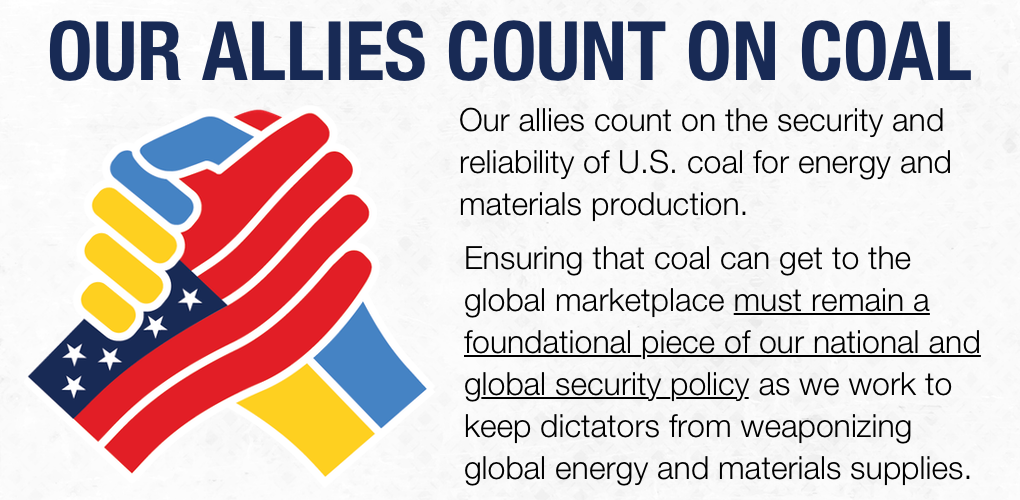
Our allies count on the security and reliability of U.S. coal for energy and materials production. Ensuring that coal can get to the global marketplace must remain a foundational piece of our national and global security policy as we work to keep dictators from weaponizing global energy and materials supplies. America’s 170-plus met mines are a critical component of the global manufacturing supply chain and an essential pillar supporting our allies’ national security.
- On October 9, 2024