
Modeling the Impossible
One of the common refrains from renewable boosters or even the U.S. Environmental Protection Agency (EPA) is that the U.S. now has the technology needed to rapidly transform our electricity mix and maintain affordable, reliable power. In other words, the renewable technology available today can replace the dispatchable power currently provided by the nation’s coal, natural gas and nuclear power plant fleets. Except, there’s one big problem—that simply isn’t true.
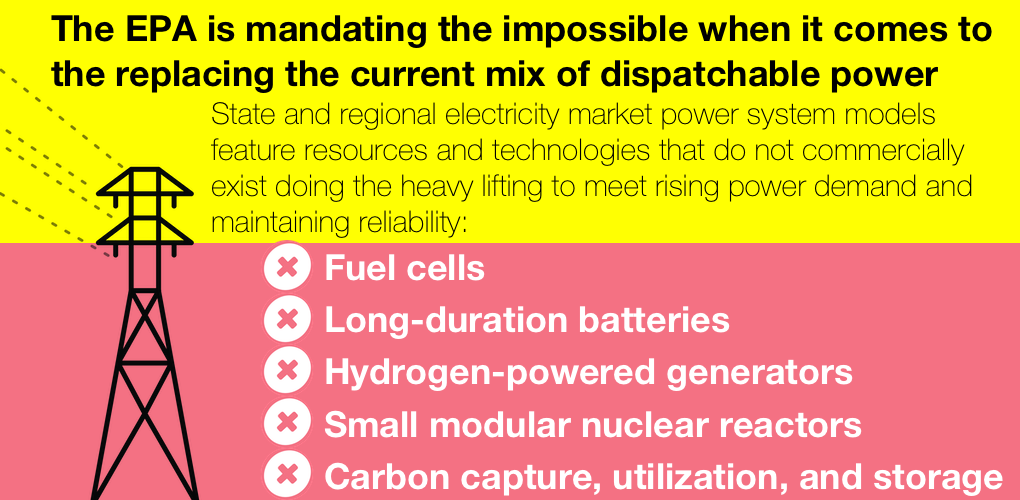
In fact, in states and regional electricity markets that have begun modeling out what their power systems will need to both meet rising power demand and maintain reliability, much of the heavy lifting is astonishingly achieved by resources and technologies that commercially don’t exist.
Consider recent analysis from New York and New England’s grid operators on what is going to be needed to meet peak winter power demand in the years ahead.
New York is aiming for 100% zero-emission electricity system by 2040 and that goal is now colliding with a projected 90% jump in power demand over the next two decades. According to NYISO, the state’s grid operator, meeting that demand will require more than tripling existing generating capacity from 37 gigawatts (GW) today to as much as 130 GW by 2040. And notably, New York will need between 20 and 40 GW of dispatchable emissions-free resources to replace 25 GW of fossil-fuel generation. Those resources could include long-duration batteries, small modular nuclear reactors, hydrogen-powered generators and fuel cells. Currently – and let’s not lose sight of this – none of those things exist in commercial operation anywhere.
New England is counting on some magic as well. ISO New England, the region’s grid operator, says the region will need to build 97 GW of new wind, solar and battery capacity by 2050. For perspective, the entire system currently has less than 30 GW of generating capacity.
With electrification of transportation and home heating shifting peak demand to winter months by the mid-2030s, New England will also need dispatchable, zero-carbon resources to maintain reliability. As the grid operator observed, long-duration storage “may help meet high demand during shorter cold snaps,” but the region will also need synthetic natural gas or small modular reactors. Again, these are technologies that haven’t been built in any kind of commercial capacity.
The Need for Dispatchable Power
The foundational problem both grid operators are addressing here is that intermittent sources of power – even with battery backup – are ill-suited to meet peak demand during adverse weather conditions. There’s a good reason the nameplate capacity for a wind or solar resource is far, far different than its accredited value in a capacity market. In other words, what kind of generation you can get from these resources during ideal conditions is a world away from what you can count on during bitter cold with gray skies and no wind.
But even if the stars were to miraculously align, and defying all expectations, renewable capacity could be built at unprecedented levels and technologies like SMRs went from blueprint to generating power nearly overnight, what would this all cost? What is the cost to consumers of needing to tear down all of today’s existing generation and build a system with three times as much power capacity in just 20 years? These are the extraordinary questions public utility commissions and policymakers need to ask.
What appears to be truer by the day is the gulf between what the EPA and some states are mandating our electricity supply becomes – in little more than a decade – and what’s achievable is growing startlingly vast. The case for building on the shoulders of today’s existing generating capacity – not tearing it down before replacement capacity is built and connected to the grid – is only getting stronger. Power supply shortfalls and soaring power prices are a choice we simply don’t have to make.
- On August 28, 2024