
Commonsense Support for an Essential Industry
You’ve probably heard the critics by now. How dare the coal industry ask for relief to weather the COVID-19 crisis?
It’s the kind of absurd question or assertion we’ve come to expect from people who simply don’t value coal jobs like others and who remain completely out of out of touch with the essential role that coal plays in keeping the lights on, homes warm and industry churning.
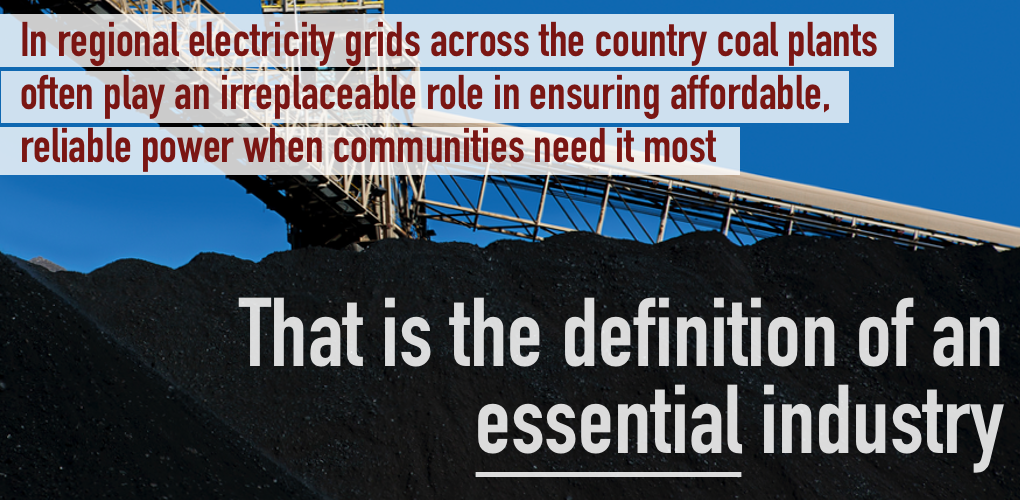
Coal continues to provide a quarter of the nation’s electricity generation. And in many states, coal is far-and-away the leading fuel for electricity generation. In regional electricity grids across the country coal plants often play an irreplaceable role in ensuring affordable, reliable power when communities need it most. That is the definition of an essential industry.
And yes, this essential industry is asking for support. But unlike other industries asking for cash bailouts, the coal industry is not. It is asking for flexibility and for a near-term reduced regulatory and tax burden to ensure its viability in this extraordinary time. Taking commonsense steps to reduce or defer taxes and royalties and to provide access to credit is smart, achievable action to keep the industry and its employees going through an unprecedented crisis.
The United States needs its coal industry and the United States government now needs to show leadership to ensure that the industry can remain a bulwark of our economy.
The stress facing the mining industry is very real. Energy demand is already being affected by city and state-wide lockdowns and reduced economic activity. The conditions expected in electricity markets in the coming weeks, and perhaps months, are going to have a profound impact on an industry that is still trying to recover and find its footing after years of regulatory overreach that shuttered plants and closed mines.
What policymakers should not do is let the current conditions in electricity markets produce sweeping consequences for the long-term health of an essential industry. It’s important that we already think about next year and the year after and the industry and electricity-generating portfolio we know we will need.
The grid we have needs dispatchable, fuel-secure coal power and it needs American mines and miners to produce it.
Government has the opportunity to provide support to stop an unnecessary and preventable hollowing out of a critical industry and workforce. The best thing we as a country can do is to make sure essential industries are provided the means to continue operating and that employers can keep people working.
As global supply chains are interrupted, we are reminded of the irreplaceable value of secure, affordable domestic sources of energy. We are also learning firsthand and in real time how important it is to have a robust industrial base that we can ramp up when needed. If we handle this challenge correctly – facing down the health crisis and effectively managing the economic upheaval it’s producing – we can rebuild and strengthen American industry. If we fail to act, or if we choose to leave some industries and the communities they support behind, we will produce through inaction an economic crisis of our own making.
The measures proposed by the coal industry to weather this storm will help safeguard the jobs of 116,000 Americans directly employed at our nation’s coal mines and 289,000 others indirectly employed through coal mining operations. These actions will also preserve the secure, affordable and balanced electricity mix we know we will need in the years ahead. This an industry, these are jobs, these are communities that deserve smart, targeted support right now.
- On March 23, 2020