
When Markets Undermine Reliability
Air conditioners are running at full throttle as summer descends in all its sticky, suffocating glory. As those ACs kick on, electricity demand is creeping up, potentially hitting record levels in some states. In Texas, as temperatures climb towards triple digits, customers are wondering if the AC – and a reliable flow of power – is going to be there when they need it. The North American Electric Reliability Corporation (NERC) is wondering the same thing.
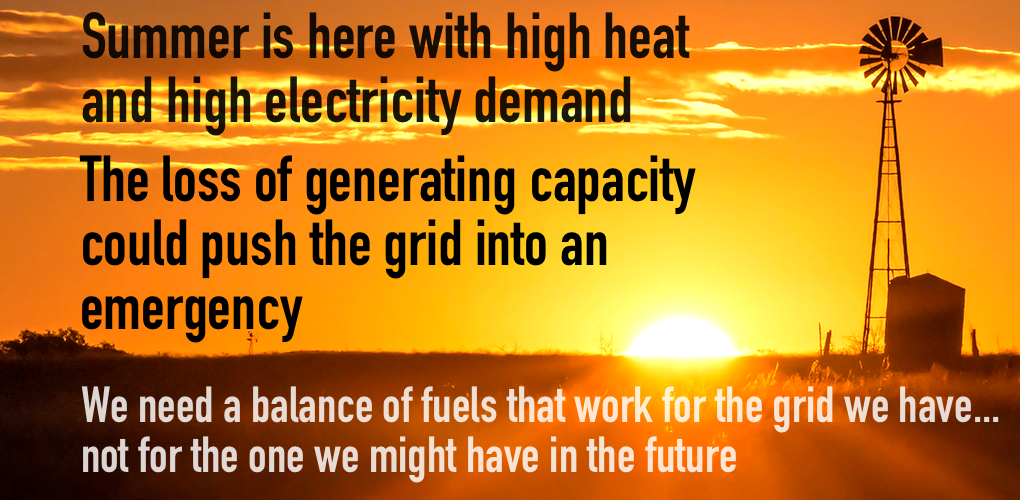
NERC’s 2019 Summer Reliability Assessment echoes a warning building for months: the Electric Reliability Council of Texas (ERCOT), which manages the state’s grid, has a razor-thin reserve margin to handle peak electricity demand this summer. ERCOT’s reserve margin of 8.5% is far below the target of 13.75%, meaning unexpectedly high heat and high demand, or the loss of generating capacity, could push the grid into an emergency.
Texas is playing with fire. The share of variable generation in Texas – meaning weather-dependent power, particularly wind generation – continues to grow. Wind generation now meets nearly 20% of the state’s electricity demand and it’s only through good fortune that the wind has cooperated when needed. While renewable advocates will tell you that wind generation is the “new baseload power” in some states, due to its relative predictability, evidence would suggest that confidence is wholeheartedly unfounded.
Recall that earlier this year – despite modeling and a range of efforts to tame the unpredictability of the weather – a cold snap in Texas, coupled with a lack of wind, backfooted grid operators. When the wind generation operators were expecting was a no-show, spot electricity prices in northern Texas jumped 700 percent.
Now imagine the same thing happens this summer. Except with the reserve margin so thin and demand so high, the result won’t just be soaring electricity prices but rolling blackouts.
The ever-growing amount of variable generation now being pushed onto the grid requires electricity market flexibility that simply doesn’t exist. The need for two-sided electricity markets where supply and demand can respond to market signals is becoming ever more acute. An editorial from the Dallas Morning News described the challenge, or problem, this way: “In most markets, buyers can respond to higher prices by reducing demand. When avocados get expensive, Texans tend to eat less guacamole. But despite an enormous investment by ratepayers in smart meters and other equipment, most electricity customers have no way to benefit by cutting usage at times when wholesale prices spike, particularly when the grid is facing an emergency. Many industrial users make strategic use of wholesale markets, but commercial and retail customers hardly at all.”
If consumers don’t know when to cut their power usage – if they can’t see the market signals and respond – we’re more or less stuck with a one-way market where only power producers can respond to higher demand. In this one-way market, variable energy is a crippling liability. Wind and solar power work when the weather permits, which too often means not when they are needed most. That’s their critical limitation, and it’s a challenge grid operators, utilities and public service commissions have too easily dismissed. As renewables’ influence on the grid grows, this theoretical problem is beginning to feel like a date with destiny.
We need a balance of fuels that work for the grid we have, not for the one we might have in the future. Without the two-sided demand response in markets, without massive amounts of exorbitantly costly energy storage or transmission networks that can move power from one side of the country to the other, the grid needs to rely on dispatchable sources of power. It needs coal, nuclear and natural gas generation. Coast-to-coast transmission remains a pipe dream, grid-scale batteries face a thicket of hurdles from a cost and technical feasibility standpoint. And yet, current market formation is pushing baseload, dispatchable power aside in favor of ever-more renewables.
Intermittent sources of power present a radically different value proposition to the electricity grid than a fuel-secure plant that can produce electricity on-demand. Shouldn’t markets prioritize a baseload coal plant that reinforces grid reliability over a competitor that threatens it? Of course they should. But until something changes, the good people of Texas should heed the advice of the editors at The Dallas Morning News: “This summer, there’s exactly enough time to hope for mild weather and to use electricity like a grumpy old man. Turn the thermostat up a couple of degrees, unplug appliances that you don’t need, and for the love of Pete, turn the lights out when you leave a room.”
- On June 26, 2019