
Great Expectations
January 11, 2017
In the political world, as in the real one, we often experience a frustrating disparity between expectation and reality. The incoming administration and the 115th Congress may prove to be the exception. At least with respect to major regulations that have hamstrung the coal industry.
Early signs suggest that House and Senate leaders, with the blessing of the new administration, intend to honor the pledges they made to undo some of the Obama-era rules that offer little benefit but come with the loss of high-wage jobs.
This is both smart politics and smart policy. Trump voters overwhelming named job creation as their number one concern. So blunting regulations that have crippled the coal industry’s market competitiveness is a great way to say “we hear you.”
It’s smart policy, too. New evidence from the Department of Energy suggests the efficacy of this approach for saving high-wage jobs and sustaining a diverse energy supply.
EIA’s 2017 Annual Energy Outlook issued this week refutes the Obama administration’s dour outlook proclaiming coal’s days are numbered. Not so, say the government’s energy experts. Where NGOs and EPA see a cold corpse, EIA feels a strong pulse.
Despite the administration’s every attempt to knock the industry out with regulations, the AEO 2017 found potential for robust coal production absent the Clean Power Plan. EIA’s reference case finds the CPP holds down coal production to 619 million short tons by 2040. Without the rule, coal production rises to 861 tons, a 39% increase. “If indeed the CPP goes away, a lot of the economics people were using to retire coal units changes quite a bit,” says Tom Hewson Jr., a principal at Energy Ventures Analysis.
This refutes several shibboleths advanced by the Obama administration. First, regulations are indeed having a destructive effect on the industry – i.e. the administration’s desired effect. Second, coal’s decline cannot be laid solely at the feet of natural gas; EIA shows coal does compete with gas without EPA’s regulatory constraints.
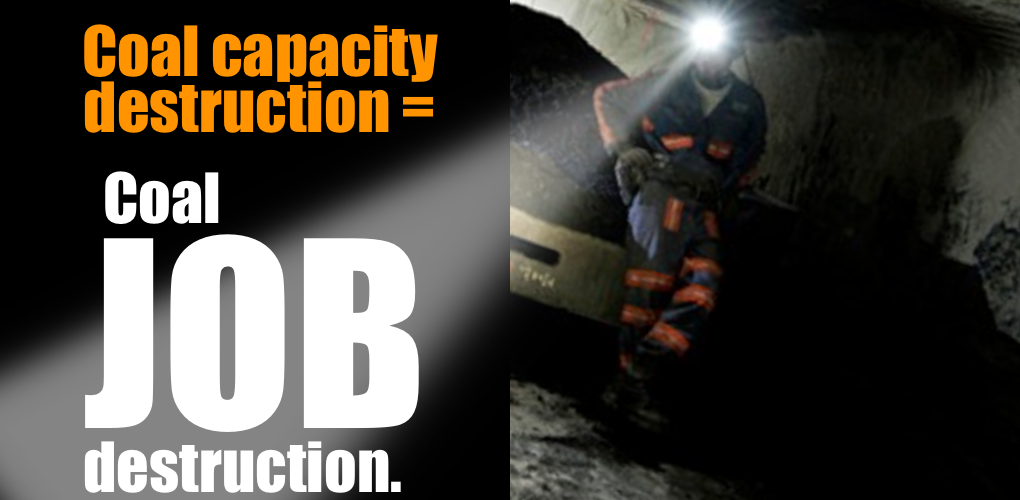
Third, capacity destruction means job destruction. Using standard multipliers and MSHA jobs data, the 242 million tons of coal that won’t be mined because of the CPP could support 27,700 jobs paying upwards of $85,000 annually with good benefits. Almost 100,000 indirect jobs could also be spared.
This finding will disappoint coal’s detractors, but it should encourage the new Congress and administration to lift the regulatory boot from coal’s neck. Those mindful of today’s political climate may see more value in defending 127,700 good jobs than a job-killing regulation.
- On January 11, 2017