
The Global Pivot to Coal Is About More Than Electricity
The ongoing conflict in the Middle East is not only reshaping energy trade flows today but it’s also beginning to transform the marketplace for years to come.
Qatar, the world’s second largest exporter of liquified natural gas (LNG), is saying damage done to its LNG facilities means it could be five years before its exports are back to full capacity. With some 70%of Qatari LNG exported to Asia, the impact on Asian economies and energy security is dramatic.
Asian nations have already turned to coal for power generation to reduce demand on sky-high gas prices. From India to South Korea, the embrace of coal as an energy affordability and security safety net is only picking up steam. Two natural gas shocks in five years are more than enough to leave a lasting impact on energy policy making.
While the global LNG market has grown steadily over the past decade, could that momentum begin to come to a screeching halt? Rebuilding trust in the LNG marketplace is going to take time. For nations now reeling from soaring prices, a push to hedge against overreliance on a deeply volatile global gas market is all but a certainty.
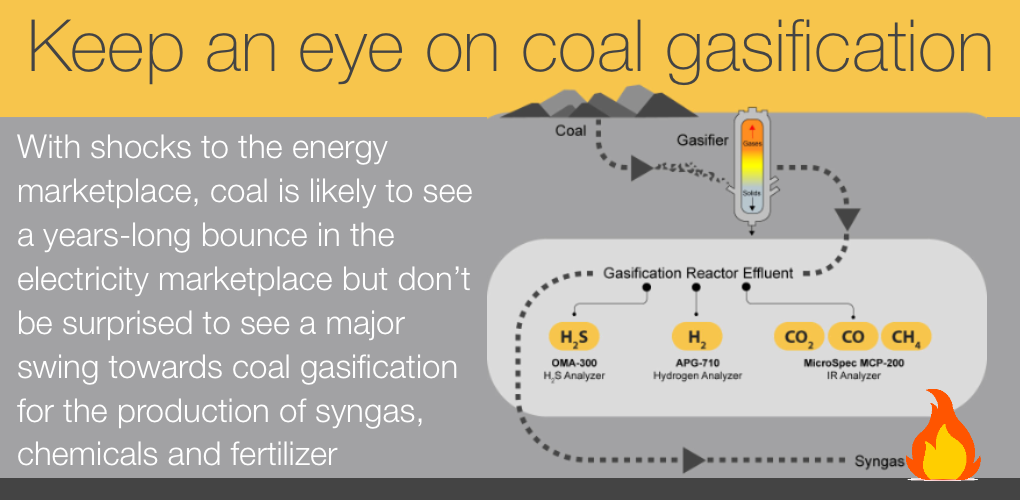
Keep an Eye on Coal Gasification
Not only is coal likely to see a years-long bounce in the electricity marketplace but don’t be surprised to see a major swing towards coal gasification for the production of syngas, chemicals and fertilizer. India is already indicating as much.
India is currently dependent on imports for 50%of natural gas supply and over 90% of methanol and fertilizers. With vast domestic coal reserves and greater trust in the global coal marketplace, India is signaling a major effort to ramp up coal gasification as it looks to shore up its own energy security and reduce its reliance on imports.
India has announced the National Coal Gasification Mission, aiming to produce 100 million tonnes of gasification by 2030. New Delhi’s embrace of gasification follows a path already taken by Beijing.
China, the world’s coal producer and user by a significant margin, has been preparing for the energy shock now upending markets by steadily building out its gasification capacity to replace industrial petrochemicals usually produced from oil and natural gas.
According to Reuters, in 2024 China’s gasification sector converted 276 million tons of coal – equivalent to roughly a year of European coal use – into chemicals, oil and gas. China has plans to double its gasification capacity by 2030.
China has been one step ahead in prioritizing energy security, with coal the foundation for that effort. As the current energy shock reverberates across the global energy marketplace, the scramble to catch up is on. Not surprisingly, renewed recognition of coal as an energy security bulwark is well underway.
- On March 25, 2026